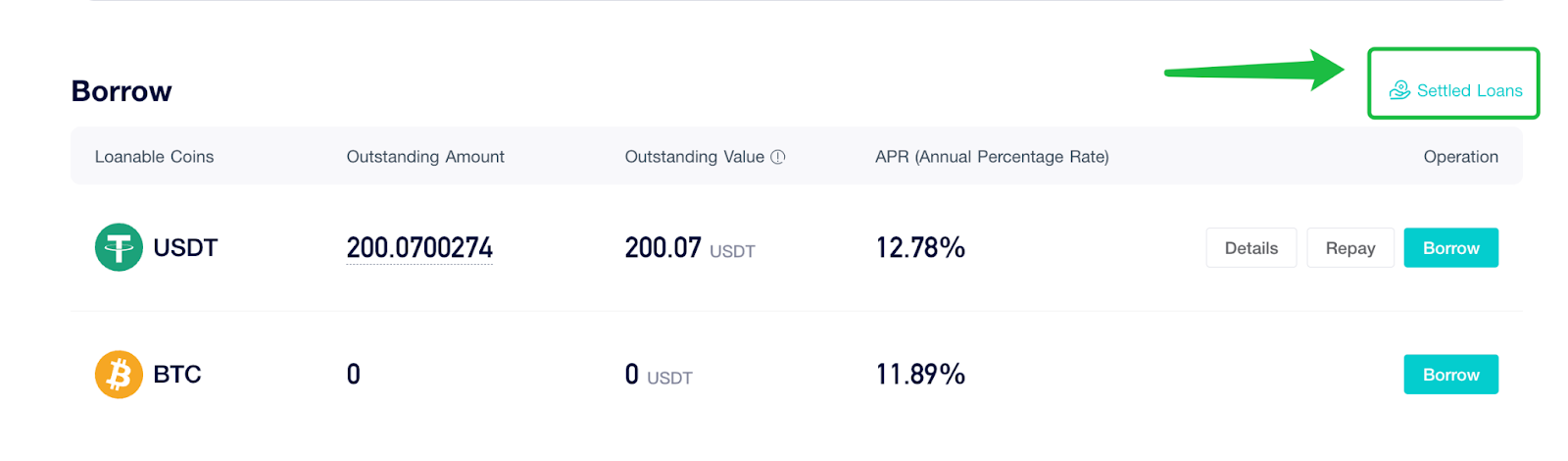
ViaBTC has processed 2.5 million transactions since 2016 securely, holding 1.7 million users' assets in multi-signature cold storage. Borrowers pay a fixed 9.9% annual percentage rate while locking assets like BTC and LTC to receive USDT instantly. The system mandates an initial overcollateralization ratio of 150%, issuing margin calls automatically when the ratio drops to 120%. Complete liquidation executes exactly at 110% to protect the lender's liquidity pool. Maintaining an 80% loan-to-value ratio prevents forced sell-offs during 24-hour market downturns. The infrastructure remains mathematically solvent if you actively monitor and adjust your daily margin levels.
Daily margin levels dictate the safety of your borrowed capital in a highly volatile market.
A highly volatile market requires users to track the daily price shifts of their chosen asset.
Daily price shifts in Bitcoin historically range between 2% and 5% during standard trading weeks.
Standard trading weeks differ vastly from panic events, where a 30% drawdown can occur within 48 hours.
A 48-hour window provides enough time to act if you maintain a 50% loan-to-value buffer.
To build a 50% loan-to-value buffer, users who
borrow with crypto collateral must deposit twice the fiat equivalent of their requested stablecoin.
Requested stablecoin issuance on the platform strictly utilizes Tether, pegged mathematically to the US dollar.
The US dollar serves as the baseline measurement for all debt calculations and liquidations.
Liquidations completely bypass the vulnerabilities of smart contracts by operating entirely on a centralized matching engine.
A centralized matching engine matches deposits to payouts in milliseconds without interacting with decentralized liquidity pools.
Decentralized liquidity pools frequently suffered exploits throughout 2022, resulting in $3.8 billion stolen by external hackers.
External hackers primarily target hot wallets connected continuously to internet-facing servers.
Internet-facing servers hold 0% of the long-term pledged assets on the ViaBTC network.
The ViaBTC network utilizes cold storage architectures to physically disconnect private keys from any online access point.
An online access point simply broadcasts the final transaction once signed by off-grid hardware devices.
Off-grid hardware devices require manual authorization from at least 3 out of 5 regional executives.
Regional executives review all outbound batches to ensure the 1:1 backing remains intact.
The 1:1 backing requires the system to mandate an initial overcollateralization ratio of roughly 150%.
An initial overcollateralization ratio of 150% acts as the mathematical baseline for platform solvency during severe market contractions.
Severe market contractions trigger automated margin calls when your specific ratio degrades to 120%.
A 120% margin call sends immediate email and SMS alerts prompting users to deposit additional assets.
Depositing additional assets usually involves one of three distinct actions:
- Sending more Bitcoin from an external wallet to increase the numerator.
- Repaying a portion of the USDT principal to decrease the denominator.
- Allowing the auto-repayment feature to redirect 100% of daily mining yields toward the debt.
Redirecting daily mining yields toward the debt effectively turns hardware output into a passive repayment schedule.
A passive repayment schedule prevents the margin ratio from reaching the 110% absolute minimum threshold.
The 110% absolute minimum threshold forces the internal engine to sell the underlying Bitcoin at current spot prices.
Current spot prices dictate the exact amount of fiat recovered to replenish the initial USDT pool.
The initial USDT pool stays fully funded because the liquidation threshold eliminates the creation of bad debt.
Bad debt creation wiped out several prominent lending platforms during the prolonged 2018 and 2022 bear cycles.
The prolonged 2018 and 2022 bear cycles destroyed competitors who lent out unsecured funds to high-frequency trading firms.
High-frequency trading firms leveraged uncollateralized positions by a factor of 10x before defaulting entirely.
Defaulting entirely cascaded through the order book and drained retail depositor funds from the affected exchanges.
Retail depositor funds on ViaBTC remain isolated because the terms of service strictly forbid rehypothecation.
Rehypothecation allows a lender to use your pledged Bitcoin to secure their own external financing.
External financing practices contrast sharply with a transparent overcollateralized structure.
| Metric |
Rehypothecation Model |
Overcollateralized Model |
| Asset Location |
Deployed to 3rd party funds |
Held in isolated cold storage |
| Risk Level |
High |
Statistically zero if liquidated |
| 2022 Examples |
Celsius, BlockFi |
MakerDAO, ViaBTC |
The transparent overcollateralized structure ensures you can retrieve the exact coins you deposited upon full repayment.
Full repayment requires the user to return the borrowed principal plus the accumulated daily interest.
Accumulated daily interest accrues by charging exactly 0.0271% per day on the outstanding balance.
The outstanding balance decreases instantly whenever you initiate a partial payment through the user dashboard.
The user dashboard updates collateral market prices every 5 seconds using an aggregated index.
An aggregated index pulls real-time volume data from major global exchanges like Binance and OKX.
Major global exchanges supply the raw pricing data to prevent localized manipulation events.
Localized manipulation events happen when a single low-volume order book experiences a temporary 90% flash crash.
A temporary 90% flash crash cannot trigger liquidations because the algorithm calculates a volume-weighted average price.
A volume-weighted average price smooths out anomalies across liquidity hubs processing over $1 billion in daily volume.
Processing over $1 billion in daily volume guarantees the margin alerts reflect true global market sentiment.
True global market sentiment shifts constantly, demanding borrowers to implement a healthy 80% loan-to-value limit.
A healthy 80% loan-to-value limit provides a comfortable buffer against typical 10% daily swings in the altcoin sector.
The altcoin sector includes Dogecoin, which ViaBTC accepted as a pledgeable asset in early 2023.
Early 2023 saw an influx of mining farm operators seeking immediate capital to upgrade their ASIC fleets.
Upgrading ASIC fleets requires upfront cash payments to manufacturers typically totaling hundreds of thousands of dollars.
Hundreds of thousands of dollars in USDT disburse automatically upon the confirmation of the on-chain deposit.
The on-chain deposit requires 6 network confirmations for Bitcoin to ensure the ledger entry cannot be reversed.
Reversing the ledger entry after 6 confirmations demands a 51% network attack, which remains economically unfeasible.
Economically unfeasible attacks protect the lender from fraudulent pledges and maintain the mathematical integrity of the collateral pool.
The mathematical integrity of the collateral pool allowed the system to automatically process
4,500 liquidations during the March 12, 2020 crash.
The March 12, 2020 crash dropped Bitcoin prices by 50% in under 24 hours without causing a single operational failure.
A single operational failure never occurred because the infrastructure strictly enforces rigid liquidation parameters to protect lender liquidity.
